بِسْمِ اللهِ الرَّحْمٰنِ الرَّحِيْمِ
السلام عليكم ورحمة الله وبركاته

AL - TAYYARAH Tours Pvt.Ltd
Information Of Riaz ul Jannah – Masjid an Nabawi
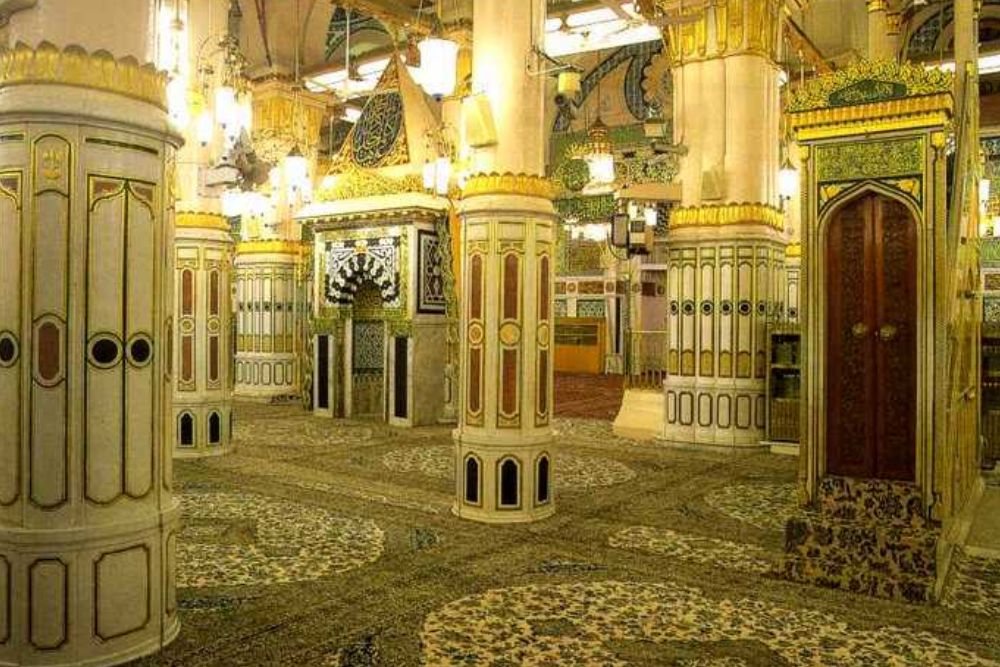
Riaz-ul-Jannah – The Garden of Paradise in Masjid an Nabawi
1. Meaning of Riaz-ul-Jannah
Riaz-ul-Jannah literally means “a Garden from the Gardens of Paradise.” According to authentic hadith, this blessed space inside Masjid an Nabawi is considered among the most sacred places on earth. It draws Muslims from across the world, all seeking closeness to Allah and His Messenger ﷺ.
2. Unique Atmosphere
Unlike the rest of Masjid an Nabawi which is carpeted in red, Riaz-ul-Jannah is marked with a distinct green carpet. This instantly distinguishes it as the special area. Pilgrims often describe a surreal sense of peace, humility, and spiritual elevation as soon as they step inside.
3. Historical Construction
In the time of the Prophet ﷺ, this was an open courtyard in the Masjid. His blessed house was adjacent to it. Here, he received revelations, delivered sermons, and guided his companions. Over centuries, rulers renovated the masjid, yet the sanctity of Riaz-ul-Jannah was always preserved.
4. The Prophet’s Pulpit
One of its highlights is the spot of the Minbar (pulpit) from where the Prophet ﷺ delivered sermons. In the early days it was a simple palm trunk; later it was replaced with a wooden pulpit. Today, while the structure has changed, the original site is preserved and revered.
5. The Pillars of Riaz-ul-Jannah
There are eight historic pillars built during the Ottoman era that still stand today, each carrying deep historical and spiritual significance:
Ustuwanah al-Hannānah
Ustuwanah al-Tawbah
Ustuwanah ‘Ā’ishah
Ustuwanah al-Wufūd
Ustuwanah al-Haras
Ustuwanah al-Sarīr
Ustuwanah Murabba‘ al-Qabr
Ustuwanah al-Tahajjud
6. Garden of Paradise
The Prophet ﷺ described this area as a part of Jannah on earth. Worshipping here gives a sense of tranquility and joy unlike anywhere else, as if a person has truly stepped into the gardens of Paradise.
7. A Place of Acceptance of Prayers
Though not a requirement of Hajj or Umrah, Muslims eagerly strive to pray here. Duas made in Riaz-ul-Jannah are accepted by Allah, and offering salah here brings immense reward. Many feel an everlasting spiritual bond after praying in this blessed spot.
8. Separate Timings for Men and Women
Due to high demand, the authorities regulate access:
Women: Morning (6 am – 11 am) and Night (9:30 pm – midnight)
Men: All other times
Pilgrims are urged to show patience, avoid pushing, and maintain the dignity of this sacred place.
9. Size of Riaz-ul-Jannah
The original area measured 22 meters long and 15 meters wide. Though Masjid an Nabawi has been expanded many times under Islamic rulers, the sanctity of Riaz-ul-Jannah has remained preserved.
10. Etiquette of Visiting
Riaz-ul-Jannah is a place of reverence and humility. Pilgrims should:
Maintain silence and respect
Avoid pushing or quarrelling
Offer prayers and duas sincerely
Leave peacefully to allow others the chance
Conclusion
Riaz-ul-Jannah is not just a spot in Masjid an Nabawi—it is a piece of Paradise on earth and a place deeply tied to the life of Prophet Muhammad ﷺ. Visiting it is a dream for every Muslim, and those blessed to pray here should do so with utmost humility, gratitude, and respect.
FAQs about Riaz-ul-Jannah
Q: What does Riaz-ul-Jannah mean?
It means “a garden from the gardens of Paradise.”
Q: How do I recognize Riaz-ul-Jannah inside Masjid an Nabawi?
It is the area with the green carpet, between the Prophet’s ﷺ house and his minbar (pulpit).
Q: Are there fixed timings for women to visit?
Yes. Women can visit from 6 am – 11 am and 9:30 pm – midnight.
Q: Is it compulsory to visit Riaz-ul-Jannah during Hajj or Umrah?
No, it is not a requirement, but it is highly recommended due to its blessings and virtue.
Q: Why is it called a Garden of Paradise?
Because the Prophet ﷺ himself said: “What is between my house and my minbar is one of the gardens of Paradise.”