بِسْمِ اللهِ الرَّحْمٰنِ الرَّحِيْمِ
السلام عليكم ورحمة الله وبركاته
AL - TAYYARAH Tours Pvt.Ltd
Information Of Ali bin Abi Talib Mosque
(مسجد علي بن أبي طالب) – Madinah
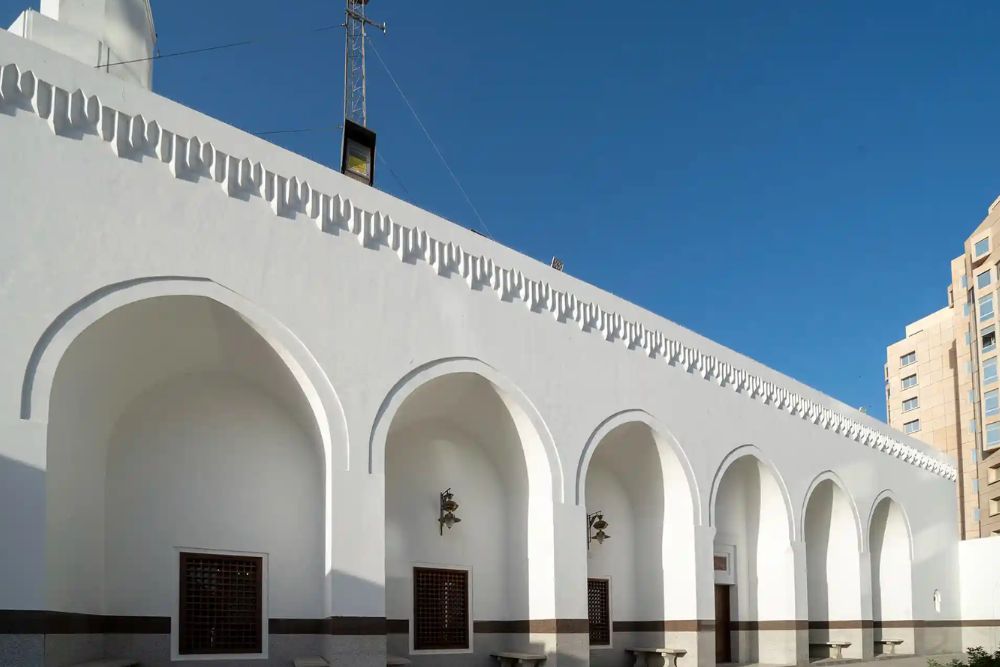
Ali bin Abi Talib Mosque (مسجد علي بن أبي طالب) – Madinah
The Ali bin Abi Talib Mosque in Madinah is one of the city’s historic mosques, named after Ali ibn Abi Talib (RA) — the cousin, son-in-law, and the fourth Caliph of Islam. It serves as both a place of worship and a symbol of Islamic heritage, reminding visitors of Ali’s courage, wisdom, and service to the Prophet Muhammad ﷺ.
Historical Roots
The mosque is believed to be built on a site where Ali ibn Abi Talib (RA) once prayed and stayed while in Madinah.
Ali (RA) was the first young male to accept Islam, a close companion in battles, and later served as the fourth Caliph of Islam.
Over centuries, the mosque has been rebuilt and renovated to preserve its historical significance.
Location
The mosque is situated in Madinah, not far from Masjid an-Nabawi.
It is often included in heritage tours, along with:
Quba Mosque (first mosque in Islam)
Masjid al-Qiblatayn (mosque of two qiblas)
Seven Mosques (Sab’ah Masajid)
This makes it a key stop for pilgrims exploring Madinah’s sacred landmarks.
Spiritual Significance
Associated with Ali (RA), a figure deeply loved and respected in Islam.
While salah here does not carry the same multiplied rewards as in Masjid an-Nabawi, visitors find deep spiritual value in praying at a mosque connected to his name.
A reminder of Ali’s qualities: bravery, justice, wisdom, and devotion.
Architectural Features
The mosque reflects a blend of traditional Islamic design with modern enhancements.
Domes and minarets highlight its historic character.
The interior is simple and calm, encouraging focus on prayer.
Modern facilities include air-conditioning, prayer rugs, and ablution areas for visitor comfort.
Role in Madinah’s Heritage Trail
Visiting this mosque connects pilgrims with the early history of Islam, particularly Ali’s legacy:
First young male to accept Islam.
Fought in major battles like Badr, Uhud, and Khandaq.
Served as a Caliph known for justice and wisdom.
Remembered for his courage, eloquence, and spirituality.
Pilgrim Experience
Visitors often describe the mosque as a quiet, reflective place compared to the larger Masjid an-Nabawi. Common practices include:
Offering two raka’at of prayer.
Reciting Qur’an and making dua.
Reflecting on Ali’s life and values.
Preservation & Maintenance
The mosque has undergone several renovations to balance history with modern convenience.
Improvements include:
Accessibility for elderly and disabled.
Upgraded prayer areas, lighting, and water supply.
Preservation of historical features to maintain authenticity.
FAQ on Ali bin Abi Talib Mosque
Q1: Who was Ali ibn Abi Talib (RA)?
He was the cousin and son-in-law of the Prophet ﷺ, the fourth Caliph of Islam, and one of the earliest Muslims.
Q2: Why is the mosque named after him?
It is built on a site associated with Ali (RA), where he once prayed during his time in Madinah.
Q3: Where is the mosque located?
In Madinah, near Masjid an-Nabawi, and close to other historic mosques like Quba and Masjid al-Qiblatayn.
Q4: What makes it special for visitors?
It provides a spiritual connection to Ali (RA) and his legacy of faith, justice, and sacrifice.
Q5: Does praying here carry extra rewards like Masjid an-Nabawi?
No, but it carries symbolic and spiritual significance, as it connects one with Islamic history.
Q6: What is the architecture like?
Simple, with domes and minarets, modern facilities, and a peaceful ambiance for worshippers.
Q7: Is it part of Madinah’s ziyarat (heritage visits)?
Yes, it is commonly included with other historic mosques during pilgrim tours.