بِسْمِ اللهِ الرَّحْمٰنِ الرَّحِيْمِ
السلام عليكم ورحمة الله وبركاته
AL - TAYYARAH Tours Pvt.Ltd
Information Of Masjid al Nabawi – History, Importance & Amazing Facts
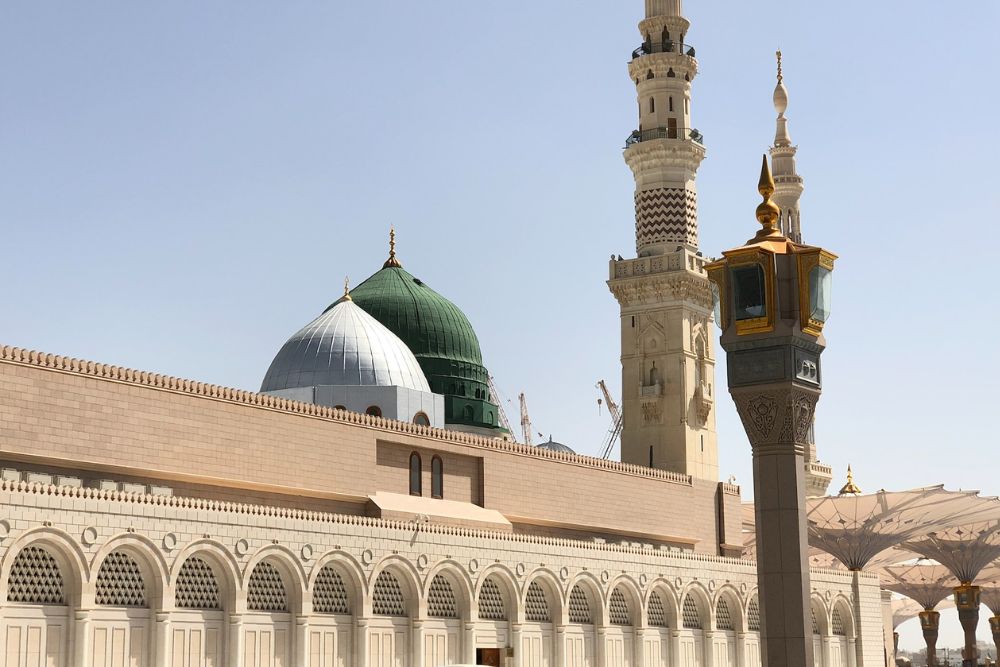
Masjid al Nabawi – History, Significance & Facts Every Muslim Should Know
Every year, millions of Muslims travel to Madinah, Saudi Arabia to visit Masjid al Nabawi (the Prophet’s Mosque). It is the second-holiest mosque in Islam, after Masjid al-Haram in Makkah, and the second-largest in the world.
Known lovingly as “Heaven on Earth”, Masjid al Nabawi is the sacred resting place of Prophet Muhammad (PBUH). Over the centuries, the mosque has expanded into a vast sanctuary, serving not only as a place of worship but also as a center for teaching, governance, and community life.
The Origin of Masjid al Nabawi
When the Prophet (PBUH) migrated to Madinah, he was warmly received by the Ansar (local Muslims). His camel, al-Qaswa, stopped at an open piece of land owned by two orphan brothers, Suhayl and Sahil (RA).
They wished to gift the land, but the Prophet (PBUH) insisted on purchasing it for 10 dinars. The ground was cleared of graves and palm trees, and with the Prophet himself participating, the mosque was built in simple form — mud walls, a roof of palm trunks, and a shaded prayer area.
This marked the beginning of what would become one of the most revered mosques in the world.
Why Masjid al Nabawi is So Important
Masjid al Nabawi is one of the three mosques in Islam where traveling specifically for prayer is encouraged. The Prophet (PBUH) said:
“One prayer in my mosque is better than a thousand prayers in any other mosque, except Masjid al-Haram.” (Bukhari)
“Do not undertake a journey except to three mosques: my mosque, Masjid al-Haram, and Masjid al-Aqsa.” (Bukhari)
The mosque is also home to Ar-Rawdah (the Garden of Paradise) — the blessed area between the Prophet’s grave and pulpit. Worshipping there is considered one of the greatest honors for a believer.
10 Remarkable Facts about Masjid al Nabawi
Next to the Prophet’s Home
The mosque was built beside the Prophet’s (PBUH) house. His living quarters, along with Aisha’s (RA) chamber, are now part of the mosque’s Sacred Chamber.The First Imam
Prophet Muhammad (PBUH) himself led the first prayers in Masjid al Nabawi.Built Over 1,400 Years Ago
Construction began in 622 AD and took about eight months to complete.The Green Dome
The iconic Green Dome was added centuries later. It was originally painted in different colors before being permanently green during the Ottoman period.Vast Expansion
Today the mosque covers over 82,000 m² and accommodates more than 3 million worshippers at a time.The Silver Dome
Apart from the Green Dome, a silver-colored dome was built and later plated with gold-trimmed stainless steel.Six Mihrabs (Prayer Niches)
Although only one mihrab is in use today, the mosque contains six in total, built across different eras.First Muezzin
Bilal ibn Rabah (RA), a close companion of the Prophet (PBUH), gave the very first Adhan (call to prayer) here.An Empty Grave for Prophet Isa (AS)
Tradition holds that a space is reserved beside the Prophet Muhammad (PBUH), Abu Bakr (RA), and Umar (RA) for Prophet Isa (AS) after his return.First Electric Lights in Arabia
In 1909, Masjid al Nabawi became the first place in the Arabian Peninsula to have electric lighting.
The Three Holiest Mosques in Islam
Masjid al-Haram (Makkah): The sacred Kaaba, center of Hajj and Umrah.
Masjid al-Aqsa (Jerusalem): The second-oldest mosque, also significant in Islamic history.
Masjid al Nabawi (Madinah): Built by the Prophet (PBUH) and his final resting place.
Summary
Masjid al Nabawi is not just a mosque — it is the heart of Islamic history and spirituality. Established by the Prophet Muhammad (PBUH) in 622 AD, it has evolved from a modest structure into one of the largest and most visited mosques in the world.
For Muslims, praying in Masjid al Nabawi, especially in Ar-Rawdah, is among the greatest blessings, and sending salam to the Prophet (PBUH) at his resting place is an unforgettable spiritual experience.
FAQs about Masjid al Nabawi
Q1. Who built Masjid al Nabawi?
Prophet Muhammad (PBUH) and his companions built it after the Hijrah to Madinah.
Q2. Why is it called the Prophet’s Mosque?
Because it was built by the Prophet (PBUH) himself, and it is where he is buried.
Q3. What is special about the Green Dome?
It marks the location of the Prophet’s grave and has become the most recognized symbol of the mosque.
Q4. Who was the first person to give Adhan in Masjid al Nabawi?
Bilal ibn Rabah (RA), one of the closest companions of the Prophet (PBUH).
Q5. Can all Muslims pray in Ar-Rawdah?
Yes, but due to its small size and huge demand, access is limited and usually requires waiting for allocated times.
Q6. How many people can pray in the mosque today?
Over 3 million worshippers can gather during peak times such as Hajj and Ramadan.
Q7. Is there really a reserved grave for Prophet Isa (AS)?
Yes, Islamic traditions mention an empty space beside the Prophet (PBUH), Abu Bakr (RA), and Umar (RA) intended for Prophet Isa (AS).
Q8. When did Masjid al Nabawi first get electricity?
In 1909, making it the first illuminated building in the Arabian Peninsula.