بِسْمِ اللهِ الرَّحْمٰنِ الرَّحِيْمِ
السلام عليكم ورحمة الله وبركاته

AL - TAYYARAH Tours Pvt.Ltd
Information Of Masjid al-Qiblatain (مسجد القبلتين) – The Mosque of Two Qiblas
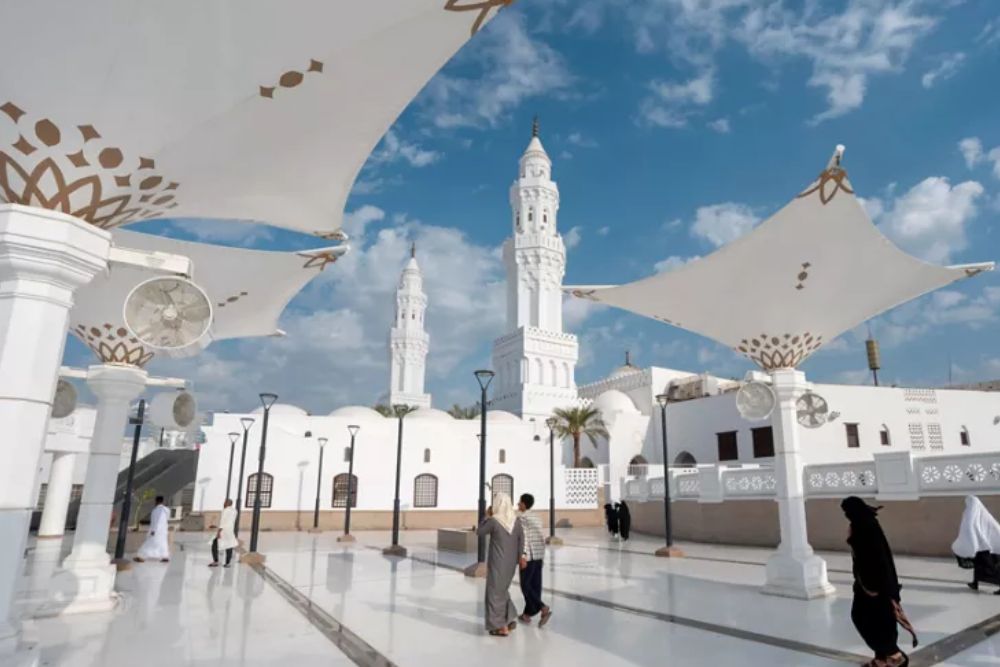
Masjid al-Qiblatain (مسجد القبلتين) – The Mosque of Two Qiblas
Masjid al-Qiblatain, meaning “Mosque of the Two Qiblas”, is one of the most important historic mosques in Madinah. It is the site where the Qibla (direction of prayer) was changed from Masjid al-Aqsa in Jerusalem to the Ka‘bah in Makkah, marking a defining moment in Islamic history.
This historic event occurred in Rajab, 2 AH (624 CE) during salah, making Masjid al-Qiblatain a place of great spiritual and historical significance for Muslims worldwide.
The Change of the Qibla
In Makkah, the Prophet Muhammad ﷺ prayed facing Bait al-Maqdis (Jerusalem), with the Ka‘bah in front of him.
After migrating to Madinah, he continued praying towards Jerusalem for 16 months, while longing for the Ka‘bah to become the permanent Qibla.
During Dhuhr (some narrations say Asr) prayer, revelation came through the verse:
“Verily, We have seen the turning of your (Muhammad’s) face towards the heaven. Surely, We shall turn you to a Qiblah that shall please you. So turn your face in the direction of Al-Masjid al-Haram (at Makkah). And wherever you are, turn your faces towards it.” (Surah al-Baqarah, 2:144)
At that moment, the Prophet ﷺ turned to face the Ka‘bah, and the companions immediately followed — thus establishing the Ka‘bah as the Qibla for all Muslims until the end of time.
Historical Significance
The mosque originally had two mihrabs (prayer niches): one facing Jerusalem and the other facing Makkah. The Jerusalem mihrab has since been covered.
This event gave Muslims a distinct religious identity, separate from Jews and other communities.
The Jews objected and asked the Prophet ﷺ to return to their Qibla, but Allah revealed:
“And even if you were to bring all kinds of proofs to the People of the Book, they would never follow your Qibla…” (Surah al-Baqarah, 2:145)
The change of Qibla purified the ranks of believers, as hypocrites and disbelievers distanced themselves.
Spiritual Value
The change of Qibla was a sign of honor for the Muslim Ummah, fulfilling a prophecy in earlier scriptures.
It symbolized the revival of the legacy of Prophet Ibrahim (AS), who built the Ka‘bah.
Aisha (RA) narrated that the Prophet ﷺ said:
“The People of the Book envy us most for three things: the Friday (Jumu‘ah) which Allah gave us and not them, the Qibla which Allah gave us and not them, and the saying of Ameen behind the Imam in prayer.” (Musnad Ahmad)
Architecture and Present-Day Mosque
Masjid al-Qiblatain has undergone several reconstructions and expansions.
Today, it is a large, modern mosque featuring domes, minarets, and spacious prayer halls.
The second (old) mihrab is now closed, but the mosque’s name preserves its historic legacy.
Visiting Masjid al-Qiblatain
Location: Northwest of Madinah, around 4 km from Masjid an-Nabawi.
Experience: Pilgrims visit to pray, reflect on the Qibla change, and appreciate the mosque’s history.
Best Time: Morning or between prayers for a calmer visit.
Nearby Sites: Often visited alongside Masjid Quba and the Seven Mosques (Sab‘ah Masajid).
FAQ on Masjid al-Qiblatain
Q1: Why is it called Masjid al-Qiblatain?
Because the Qibla changed here from Jerusalem to Makkah during salah, giving the mosque two Qiblas.
Q2: When did the Qibla change occur?
In Rajab of the 2nd year after Hijrah (624 CE).
Q3: Which prayer was being offered when the Qibla changed?
Most reports mention Dhuhr, while some say Asr.
Q4: Does the mosque still have two mihrabs?
It originally did, but the old one facing Jerusalem has now been covered.
Q5: What does the Qibla change symbolize?
It marked the independence of Muslims as a distinct Ummah and affirmed their connection to the Ka‘bah, the House built by Prophet Ibrahim (AS).
Q6: How far is Masjid al-Qiblatain from Masjid an-Nabawi?
About 4 kilometers, easily reachable by car or bus.