بِسْمِ اللهِ الرَّحْمٰنِ الرَّحِيْمِ
السلام عليكم ورحمة الله وبركاته

AL - TAYYARAH Tours Pvt.Ltd
Information Of Mount Uhud & the Battle of Uhud – A Place of Lessons and Martyrdom
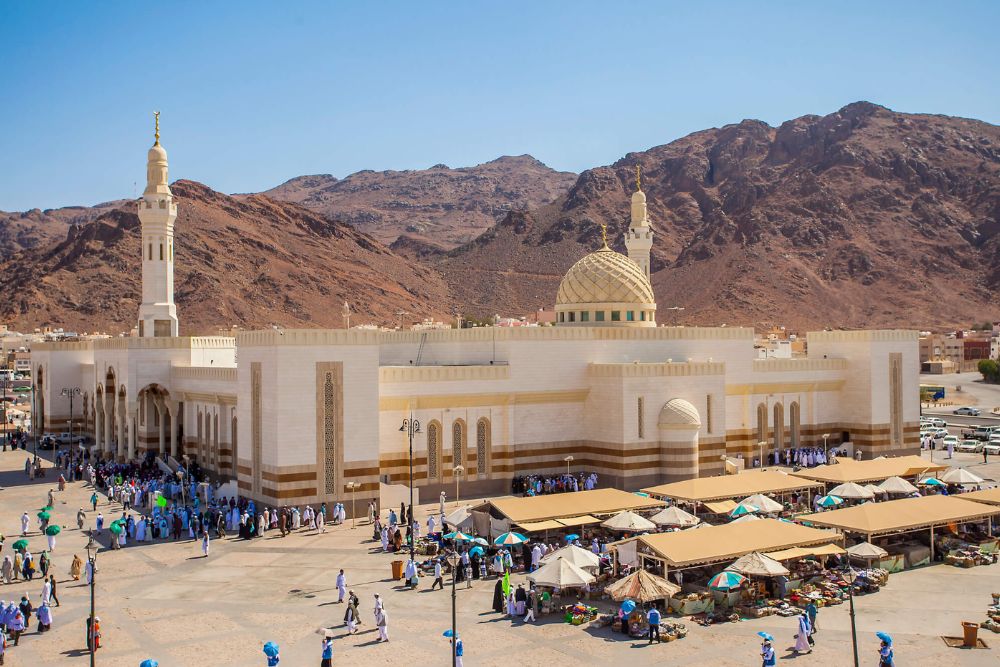
Mount Uhud & the Battle of Uhud – A Place of Lessons and Martyrdom
The Battle of Uhud site, located north of Madinah, is among the most important historical landmarks for Muslims. It was here, in 3 AH / 624 CE, that the second major battle between the Muslims and the Quraysh of Makkah took place.
What began as a near victory for the Muslims turned into a painful defeat due to disobedience of the Prophet’s ﷺ instructions, leaving behind lessons of obedience, sacrifice, and steadfastness that remain timeless. Today, pilgrims visit Mount Uhud to reflect on this history, offer prayers, and pay respects at the graves of the martyrs of Uhud, especially Sayyid al-Shuhada Hamza ibn Abdul Muttalib (RA), the beloved uncle of the Prophet ﷺ.
Historical Background of the Battle of Uhud
Following their humiliating defeat at Badr, the Quraysh prepared an army of 3,000 soldiers, including cavalry and armor, led by Abu Sufyan. His wife Hind bint Utbah and other women accompanied them to incite revenge.
The Muslims had only 700 fighters. The Prophet ﷺ placed 50 archers under Abdullah ibn Jubair (RA) at Jabal al-Rumah (the Archer’s Hill) to guard against surprise attacks.
The Muslim army initially pushed back the Quraysh, and victory seemed certain. Heroes like Hamza (RA) and Abu Dujanah (RA) fought with unmatched bravery.
However, when the archers abandoned their posts to collect war spoils, the Muslims became exposed from behind.
This was when Khalid ibn al-Walid (RA), then still a non-Muslim, led a cavalry attack that turned the tide.
The Prophet ﷺ was injured — his helmet pierced his blessed face, a tooth was broken, and his face was cut. Rumors spread that he had been killed, shaking Muslim morale.
Mus‘ab ibn Umair (RA), who resembled the Prophet ﷺ, was martyred while carrying the standard, further deepening the confusion.
Ultimately, the Muslims retreated to safety, but at a heavy cost: 70 companions were martyred, including Hamza (RA), who was brutally killed by Wahshi under Hind’s orders.
Key Sites at Uhud Today
1. Mount Uhud (جبل أحد)
Known as the “Mountain of Paradise”, the Prophet ﷺ said:
“Uhud is a mountain which loves us, and we love it.” [Bukhari]Visitors often climb parts of it to reflect on its history and the battle that took place around it.
2. Graves of the Martyrs of Uhud
A dedicated cemetery holds the graves of 70 martyrs, including Hamza ibn Abdul Muttalib (RA).
Pilgrims visit here to make du‘a, remembering the sacrifice of those who gave their lives for Islam.
3. Jabal al-Rumah (The Archers’ Hill)
A small hill where the Prophet ﷺ had stationed 50 archers.
It stands as a powerful reminder of the importance of discipline and obedience in Islam.
Spiritual Significance
Uhud is not just a battlefield — it is a place of deep reflection:
On the consequences of disobedience.
On the importance of steadfastness in trials.
On the sacrifice of companions who laid down their lives for Islam.
Visiting Uhud strengthens the bond with the Prophet ﷺ and his companions by remembering their struggles.
Visiting Mount Uhud
Location: About 5 km north of Masjid an-Nabawi.
Etiquette:
Offer salaam and make du‘a for the martyrs.
Avoid acts of innovation (like placing objects or writing on graves).
Remember the site is about reflection and prayer, not tourism.
Best Time: Usually visited during the day as part of Madinah ziyarat tours (often combined with Masjid Quba, Masjid Qiblatain, and the Seven Mosques).
FAQ – Mount Uhud & Battle of Uhud
Q1: Why was the Battle of Uhud a defeat for the Muslims?
Because the archers disobeyed the Prophet’s ﷺ command and abandoned their post, allowing the Quraysh cavalry to strike from behind.
Q2: Who was martyred at Uhud?
About 70 companions, including Hamza (RA), Mus‘ab ibn Umair (RA), and other notable sahabah.
Q3: What happened to the Prophet ﷺ in this battle?
He was injured — a tooth broken, face wounded, and helmet rings embedded in his cheek. But he survived and regrouped the Muslims.
Q4: Can visitors pray at the graves of the martyrs?
No formal prayers are offered at graves, but visitors can make du‘a for them and greet them with salaam.
Q5: What lesson does Uhud teach us?
That victory comes only with obedience to Allah and His Messenger ﷺ. Disobedience, even from a few, can lead to great loss.
Q6: How far is Uhud from Masjid an-Nabawi?
Around 5 km, about a 10–15 minute drive.