بِسْمِ اللهِ الرَّحْمٰنِ الرَّحِيْمِ
السلام عليكم ورحمة الله وبركاته

AL - TAYYARAH Tours Pvt.Ltd
Information Of The Canal of Zubaidah
(Nehr Zubaidah)
.
🏞️ The Canal of Zubaidah (Nehr Zubaidah)
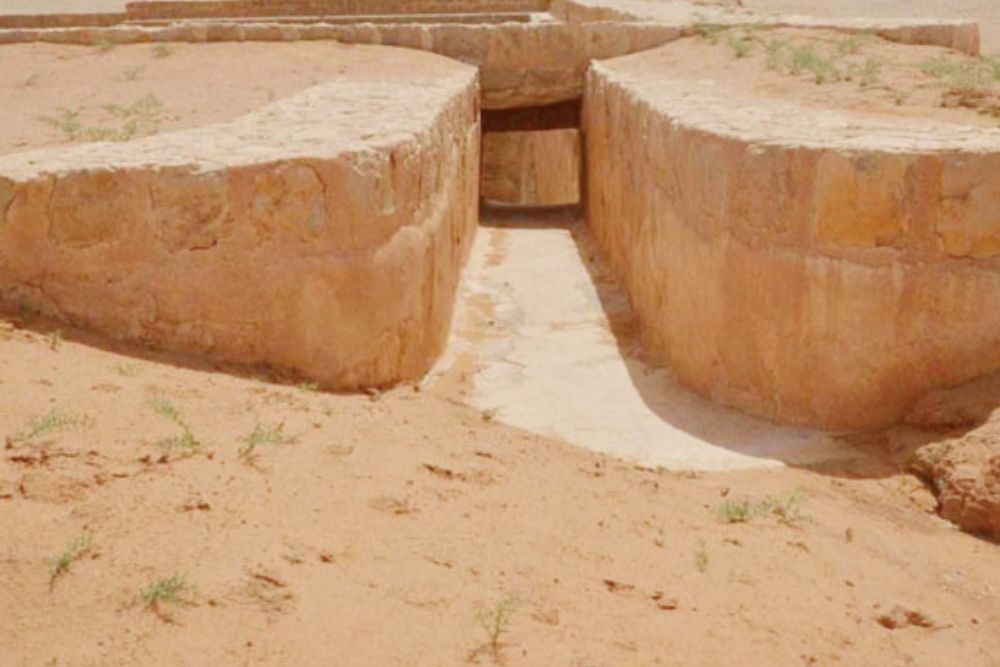
At the foot of Mount Arafat, you can still see the stone remains of what was once part of the Canal of Zubaidah — an extraordinary water system commissioned in the early 9th century by the Abbasid queen Zubaidah bint Ja’far. Built to supply water for pilgrims, the project became one of the greatest humanitarian and engineering achievements of the Islamic Golden Age.
👑 Who was Zubaidah?
Zubaidah bint Ja’far ibn Mansur was the wife of the Abbasid Caliph Harun al-Rashid (r. 786–809 CE).
She was known for her immense wealth, piety, and humility.
Her palace in Baghdad was filled with female reciters of the Qur’an, and their voices made the entire place sound like a beehive of worship.
Zubaidah was deeply devoted to humanitarian causes, but her greatest legacy was her work to improve the 900-mile pilgrimage route (Darb-e-Zubaidah) that connected Kufa (Iraq) to Makkah and Madinah.
💧 Inspiration Behind the Canal
In 809 CE (193 AH), during her fifth Hajj, Zubaidah witnessed a severe drought in Makkah.
Pilgrims and locals were suffering greatly due to lack of water.
Saddened, she resolved to find a lasting solution. She immediately called in engineers and experts from different regions.
The engineers suggested bringing water from the spring of Hunain, located about 95 km east of Makkah.
Because the land was rocky and barren, it wasn’t possible to build a surface canal. Instead, they designed an aqueduct system, channeling water through underground tunnels and releasing it at intervals where needed.
🛠️ Building the Canal of Zubaidah
Zubaidah purchased the entire Hunain Valley to secure its water resources.
Construction required massive digging, tunneling, and stone engineering across rugged hills.
The entire cost was funded personally by Zubaidah. When warned about the expense, she famously declared:
“I am determined to complete this project — even if every stroke of the pickaxe were to cost a dinar.”
After years of work, the canal reached Mount Arafat, and was extended further to Mina and Muzdalifah.
The canal stretched approximately 35 km and became a vital lifeline for pilgrims and locals.
🌍 Legacy of the Canal
The Canal of Zubaidah provided water for over 1,000 years.
It became a symbol of charity, foresight, and dedication to the service of pilgrims.
📉 Decline of the Canal
Over the centuries, the canal suffered from cracks, leaks, and neglect.
By the late 20th century, it was no longer functioning.
In 1980, the water supply had completely dried up.
There have been proposals by the Saudi government to restore parts of the canal as a historical and cultural heritage site.
📌 FAQs About the Canal of Zubaidah
📍 Where is the Canal of Zubaidah located?
The canal extended from the spring of Hunain (east of Makkah) and reached Mount Arafat, Mina, and Muzdalifah. Today, stone remnants can be seen near Mount Arafat.
👑 Who built the Canal of Zubaidah?
It was commissioned by Zubaidah bint Ja’far, wife of Caliph Harun al-Rashid, in the early 9th century.
💧 Why was the canal built?
It was built to provide fresh water for pilgrims and locals in Makkah, especially after Zubaidah witnessed a devastating drought during her Hajj in 809 CE.
⏳ How long was the Canal of Zubaidah?
The canal was approximately 35 km long.
🕰️ How long did the canal serve pilgrims?
It provided water for over a thousand years, until it dried up in the late 20th century.
⚠️ What caused the decline of the canal?
Neglect, cracks, and leaks in the structure eventually caused its water supply to fail. By 1980, it had completely dried up.
🏗️ Are there plans to restore the canal?
Yes, there have been discussions and proposals by the Saudi government to restore parts of the canal for historical preservation.